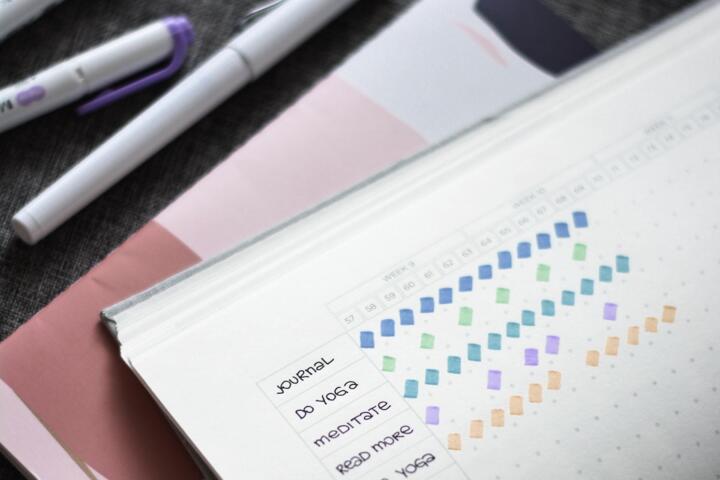
Ritual of Tracking
Habit tracking, at its core, is the practice of recording behavioral patterns to leverage the neurological feedback loop of "cue, craving, response, and reward." By visualizing progress through apps like Streaks or physical journals, individuals create a tangible record of their evolution. It transforms abstract goals, like "being healthy," into concrete data points like "10,000 steps taken."
In my practice, I’ve seen executives who manage multi-million dollar portfolios crumble because they missed a single "meditation" checkmark. This is the paradox of quantification: the tool meant to liberate us often becomes a new form of digital confinement. A study published in the Journal of Consumer Research suggests that monitoring an enjoyable activity can turn it into "work," undermining intrinsic motivation.
Statistically, the global wellness app market is projected to reach $150 billion by 2030, driven by our obsession with self-optimization. However, data from behavioral psychologists indicates that approximately 30% of power users experience "quantified-self fatigue" within the first six months, leading to a complete abandonment of all positive routines.
The Trap of Metrics
The primary error in modern habit management is the shift from "intent" to "compliance." When the goal becomes the streak itself rather than the benefits of the habit, the system is broken. Users start "performing" their lives for an algorithm rather than living them. This creates a fragile ego state where a missed day feels like a moral failure.
This obsession matters because it triggers the "What the Heck Effect"—a cognitive bias where one small slip leads to a total collapse of discipline. If you miss your 6:00 AM gym session, you might spend the rest of the day binge-eating because the "perfect" record is already ruined. The psychological cost is a chronic state of low-level cortisol elevation.
Real-world consequences include social withdrawal (skipping dinner with friends to hit a step goal) and sleep deprivation (staying up to finish a "reading" habit). I recently consulted a developer who used Way of Life to track 25 different metrics daily; he was technically "productive" but was on the verge of a clinical burnout due to the sheer cognitive load of reporting.
Strategies for Balance
The Non-Binary Success Model
Instead of a "Yes/No" checkbox, implement a sliding scale of 1–3 or a "Good/Better/Best" framework. This acknowledges that a 10-minute walk is better than nothing, even if you didn't hit your 5-mile run. This reduces the "all-or-nothing" thinking that fuels guilt.
Periodic Digital Fasting
Schedule one "Tracking-Free Day" per week. Apps like Habitica can be paused. This forces you to reconnect with how your body actually feels without looking at a screen. If you feel energetic without checking your sleep score on an Oura ring, that is true physiological awareness.
Priority-Based Pruning
Limit yourself to no more than three active "growth" habits at a time. Using tools like Any.do or simple Notion templates, categorize habits into "Essential" and "Experimental." If an experimental habit causes more stress than utility after 21 days, delete it without apology.
Focus on Identity Shift
James Clear, author of Atomic Habits, emphasizes that true change is about identity. Ask: "Would a healthy person take the stairs?" If you do it, you've succeeded, regardless of whether you logged it. Use Tally for quick, low-friction entry to keep the focus on the action, not the interface.
Reframing the Missed Day
Adopt the "Never Miss Twice" rule. This turns a mistake into a data point rather than a catastrophe. Research in the British Journal of General Practice shows that missing one day of a habit does not materially affect the long-term formation of that neural pathway.
The Monthly Audit System
Once every 30 days, review your tracking app (like HabitShare). Ask: "Does this habit still serve my 5-year vision?" If you are tracking "Drink 3L of water" but it’s become a mindless chore that disrupts your focus with frequent breaks, adjust the goal to a more sustainable level.
Real World Outcomes
Consider a boutique marketing agency based in Austin. The founder implemented a mandatory habit-tracking program for staff using a shared Google Sheet to "encourage health." Within three months, employee turnover increased by 15%, and exit interviews cited "intrusive management" and "performance guilt."
They pivoted by making tracking optional and anonymous, focusing on "wellness credits" rather than specific metrics. The result was a 20% increase in reported job satisfaction and a return to baseline productivity. This demonstrates that when you remove the "shame" element, genuine engagement returns.
Another case involves a freelance graphic designer who tracked 15 habits daily. After experiencing a panic attack when her phone died (and her streaks were at risk), she cut down to 2 essential habits: "deep work" and "outdoor time." Within two months, her billable hours rose by 30% because her mental energy wasn't being drained by administrative self-oversight.
Tool Utility Overview
| Tool Name | Best For | Anti-Obsession Feature |
|---|---|---|
| Streaks | Visual Learners | Negative habits (tracking things to stop) |
| Habitica | Gamification | RPG elements distract from pure "metric" focus |
| Done | Simplicity | Allows multiple completions per day (flexible) |
| Loop | Privacy/Open Source | Detailed charts without social pressure |
| Bullet Journal | Analog Purists | Physical friction prevents over-tracking |
Managing Daily Errors
One major mistake is tracking "lag measures" (like weight) instead of "lead measures" (like eating protein). You cannot control the scale daily, but you can control your plate. Tracking things outside your immediate control leads to helplessness and inevitable obsession with numbers that fluctuate naturally.
Another error is "Social Comparison Tracking." Using apps with social feeds can trigger a competitive urge that ruins the personal nature of growth. If seeing a friend's 500-day streak makes you feel inferior, turn off the social features immediately. Growth is a solo journey, not a leaderboard sport.
To fix this, conduct a "Value Alignment Check." If your tracker says you are "winning" but you feel exhausted and lonely, your metrics are misaligned with your values. Stop tracking the quantity of work and start tracking the quality of your recovery periods.
FAQ
Is habit tracking bad?
No, it is a tool. It becomes harmful only when the data points replace your internal intuition and self-compassion.
How many habits are too many?
For most people, exceeding 5 tracked items daily leads to "decision fatigue," making it harder to actually perform the habits.
What if I lose a long streak?
A streak is a record of the past, not a predictor of the future. The skills you gained during those days remain in your muscle memory.
Should I use digital or paper?
Digital is better for data analysis; paper is better for mindfulness. If you struggle with obsession, switch to paper to slow down the process.
Does tracking cause anxiety?
It can trigger "Obsessive-Compulsive Tendencies" in predisposed individuals. If you feel "itchy" or anxious when unable to log a habit, it's time to step back.
Author’s Insight
In my years of studying productivity systems, I’ve found that the most resilient people are those who view habit trackers as "training wheels" rather than a permanent bicycle. I personally stopped tracking my water intake and sleep once they became second nature. My advice: use tracking to build the neural path, then delete the app and trust yourself. The ultimate goal of a habit tracker should be to make itself obsolete.
Summary
The transition from disciplined growth to obsessive monitoring is a subtle one, often masked by the guise of "self-improvement." To avoid the dark side of productivity, prioritize flexibility over rigid streaks and focus on how you feel rather than what the screen dictates. Audit your digital tools regularly to ensure they reduce your mental load instead of adding to it. Start today by deleting one non-essential habit from your tracker and reclaiming that mental space for spontaneous living.