Defining Equilibrium
At its core, the state of "flow"—a term coined by psychologist Mihaly Csikszentmihalyi—is a period of intense focus where self-consciousness fades and time appears to warp. To enter this state, the task at hand must sit in a "Goldilocks Zone": it cannot be so easy that you fall into apathy, nor so difficult that you succumb to anxiety. Research suggests that the ideal challenge-to-skill ratio requires a task to be roughly 4% beyond your current comfort level.
In practice, consider a software developer using GitHub Copilot. If they only write boilerplate code, they disengage. If they attempt to build a custom neural network from scratch without the right background, they freeze. The "sweet spot" is using AI to handle syntax while the developer focuses on complex architectural logic. According to a 2024 study on workplace performance, employees who experience regular flow states are 500% more productivity than their counterparts.
Common Friction Points
The primary barrier to consistent output is the "Anxiety-Boredom Trap." Most professionals oscillate between being overwhelmed by massive, undefined projects and being under-stimulated by repetitive administrative work. When a task’s difficulty vastly outweighs your skill, the brain triggers the amygdala, leading to "procrastination via fear." Conversely, if your skills far exceed the task, your brain seeks dopamine elsewhere—usually through social media or news feeds.
Another critical failure is the "Multitasking Myth." Switching between Slack, Gmail, and a core project creates cognitive switching costs. It can take up to 23 minutes to return to deep focus after a single interruption. Real-world situations often involve managers "pinging" employees for updates, which effectively shatters the delicate balance required for high-level problem-solving. This lack of protected "deep work" time results in a 10-point drop in functional IQ, comparable to losing a full night of sleep.
Strategies for Balance
The 4% Challenge Rule
To maintain engagement, incrementally increase the difficulty of routine tasks. If you are a graphic designer using Adobe Illustrator, don’t just execute the brief; attempt to use a new technique or a keyboard-shortcut-only workflow. This slight stretch keeps the prefrontal cortex active without triggering a stress response. Data from learning platforms like Coursera shows that learners who engage with "stretch goals" retain 25% more information than those who stay within known parameters.
Micro-Slicing Large Tasks
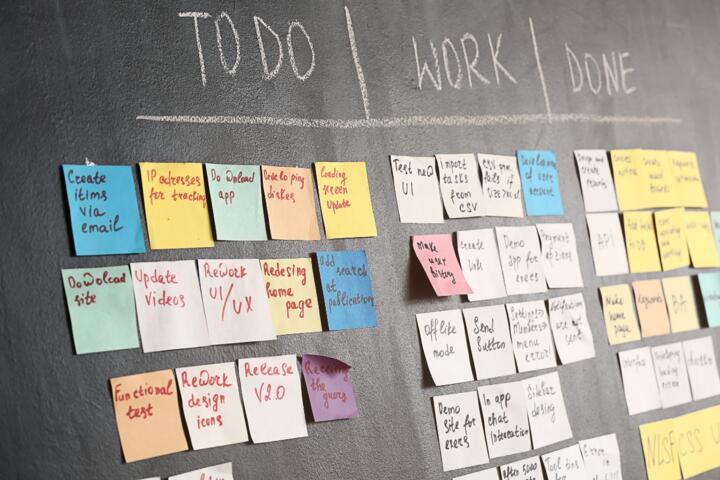
Complexity is the enemy of action. Use tools like Trello or Asana to break "Finish Q3 Report" into "Extract raw data from Salesforce" and "Draft executive summary." By reducing the perceived challenge to match your immediate energy levels, you lower the barrier to entry. This methodology relies on the Zeigarnik Effect, where the brain remains motivated to finish a task once it has been physically started through a small action.
High-Friction Work Buffers
Protect your cognitive resources by scheduling high-challenge tasks during your biological peak. For most, this is the first 2-4 hours after waking. Use Freedom.to or Cold Turkey to block distracting domains. By removing the "skill" of willpower from the equation and replacing it with environmental design, you allow your brain to dedicate 100% of its energy to the challenge at hand. Expert performers often cite this "fortress of solitude" as their most valuable asset.
Feedback Loop Acceleration
Flow requires immediate feedback. If you don't know if you're succeeding, your mind wanders. When learning a new language on Duolingo, the instant "ding" provides the necessary feedback to adjust your skill. In a professional setting, use automated testing in Jenkins or real-time analytics in Google Analytics 4 to see the immediate impact of your work. Fast feedback cycles reduce the ambiguity that often leads to task abandonment.
Skill-Stacking Integration
When a task becomes too easy (boredom), introduce a secondary skill to raise the challenge. If writing an article is becoming rote, try incorporating data visualization using Tableau or Canva. This "Skill-Stacking" increases the complexity of the output while keeping the user engaged. A 2025 survey of freelance creators found that those who diversified their technical skill sets reported a 40% higher rate of "work satisfaction" compared to specialists who performed repetitive actions.
Active Recovery Intervals
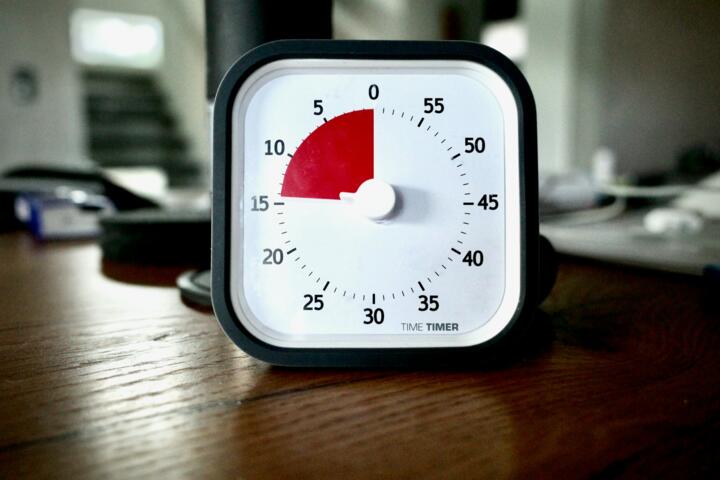
You cannot stay in high-challenge mode indefinitely. Use the Pomodoro Technique (50 minutes work, 10 minutes break) to prevent cognitive fatigue. During breaks, avoid digital inputs. Instead, practice "Non-Sleep Deep Rest" (NSDR) or a brief walk. This allows the brain to consolidate the skills used during the high-focus period. Research from Stanford University indicates that movement increases creative output by an average of 60%.
Efficiency Case Studies
Case Study 1: Tech Solutions Inc.
The engineering team was suffering from 30% turnover due to "burnout" (high challenge, low perceived skill/support). They implemented "No-Meeting Wednesdays" and integrated Notion for centralized documentation. By reducing administrative friction and providing "Focus Blocks," the company saw a 22% increase in code deployments and a 15% rise in employee retention within six months.
Case Study 2: Boutique Marketing Agency
The creative team felt stagnant (low challenge, high skill). The leadership introduced a "10% Innovation Time" policy where staff used Midjourney and Runway Gen-2 to experiment with AI-driven ad concepts. This increased the challenge level to match their veteran skills. The result was a 40% increase in successful client pitches and two industry awards for "Most Innovative Campaign."
Tool Efficiency Audit
| Tool Category | Service Example | Primary Flow Benefit | Best For |
|---|---|---|---|
| Focus Enhancement | Brain.fm | Uses neural phase-locking to induce focus. | High-Challenge Tasks |
| Task Management | Todoist | Reduces cognitive load by externalizing memory. | Complex Project Slicing |
| Deep Work Protection | Forest App | Gamifies the avoidance of phone distractions. | Breaking Smartphone Addiction |
| Feedback/Analytics | RescueTime | Provides data on where your "Focus" is lost. | Identifying Boredom Gaps |
Avoiding Common Pitfalls
The most frequent error is "Chasing the High." Flow is a high-cost state for the brain; you cannot stay there for 8 hours a day. Expecting constant peak performance leads to "Flow Burnout." Instead, aim for one or two 90-minute "Deep Work" sessions. Another mistake is ignoring the environment. Trying to balance skills and challenges in a noisy open-office plan is a losing battle. Invest in high-quality noise-canceling headphones (like Sony WH-1000XM5) to lower environmental "difficulty" so you can focus on the "task" difficulty.
Furthermore, don't confuse "busy" with "flow." Checking 100 emails is high-activity but low-challenge; it feels productive but provides zero cognitive growth. Use the Eisenhower Matrix to filter out these low-challenge/low-value tasks. If a task is low-skill and low-challenge, delegate it or automate it using Zapier. Save your human "Flow Equation" for the work that actually moves the needle.
FAQ
How do I know if a task is too difficult?
If you find yourself physically tensing your shoulders, holding your breath, or repeatedly checking the time, the challenge exceeds your current skill or energy level. Break it down further.
Can flow be achieved in boring tasks?
Yes, by adding "artificial constraints." For example, try to finish a data entry task in 20 minutes instead of 30, or try to do it with 100% accuracy without using your mouse.
What is the "Flow Hangover"?
After intense concentration, your brain may feel "foggy" because it has depleted its glucose and neurotransmitter stores. This is normal. Rest is mandatory, not optional.
How does caffeine affect this balance?
Moderate caffeine can help "Skill" by increasing alertness, but too much can push you into "Anxiety" by over-stimulating the nervous system, making it impossible to sit still for deep work.
Is flow better for individuals or teams?
While individuals enter flow more easily, "Group Flow" is possible during brainstorming or high-stakes execution. It requires clear goals and high "social safety" where everyone's skills are respected.
Author’s Insight
In my years of consulting for high-output teams, I’ve realized that people don’t hate work; they hate feeling incompetent or bored. Most "burnout" I see isn't from working too hard—it's from working too long on tasks that don't provide a sense of mastery. My personal hack is the "15-Minute Entry." If a task feels daunting, I commit to just 15 minutes. Usually, this is enough time for my skills to "warm up" and meet the challenge, naturally sliding me into a flow state that lasts for hours. Mastery is a moving target; keep adjusting your sights.
Summary
The secret to sustainable productivity lies in the precise calibration of the "Flow Equation." By intentionally matching the difficulty of your daily responsibilities with your evolving skill set, you bypass the psychological barriers of anxiety and boredom. Start today by identifying one "High-Anxiety" task and breaking it down, or one "Boredom" task and adding a layer of complexity. Consistent application of these principles, supported by the right digital tools, will transform your professional output from a series of forced efforts into a streamlined state of mastery.