Plain-Text Revolution
At its core, Markdown is a lightweight markup language that allows you to add formatting to plain text using a series of intuitive symbols. Unlike "What You See Is What You Get" (WYSIWYG) editors like Microsoft Word or Google Docs, Markdown keeps the formatting instructions directly in the text file. This means a .md file is essentially a .txt file with better manners; it can be read by any basic text editor ever made, yet it can be instantly rendered into a polished PDF, HTML page, or presentation.
In professional environments, this is transformative. For instance, technical writers at companies like Microsoft and GitHub use it to manage documentation because it allows for "version control." You can see exactly what changed between two versions of a document, line by line. Statistics show that developers spend up to 70% of their documentation time in Markdown-supported environments. It eliminates the friction of hunting through menus for a "Bold" button, allowing for a state of "flow" during the writing process.
Proprietary Format Traps
Most people store their most valuable ideas in formats that are effectively "black boxes." If you use a proprietary note-taking app that saves files in a unique database format, you are renting your own data. If that company goes bankrupt or changes its pricing model, your notes are held hostage. This is often referred to as "Digital Serfdom."
The primary issue with rich-text formats (RTF) or .docx files is "bloat." A simple sentence in a Word document can carry kilobytes of hidden metadata regarding printer settings, font history, and author tracking. When you try to move 5,000 notes from one proprietary system to another, the formatting often breaks, images go missing, and links fail. I have seen researchers lose years of interconnected citations simply because a specific app version was deprecated. Relying on cloud-only tools without a local, readable backup is a high-risk strategy for any professional.
Future-Proof Systems
Mastering the Syntax Essentials
To start, you only need to learn six or seven symbols. A single hash (#) creates a primary heading, while two (##) create a sub-heading. Asterisks (*) or underscores (_) create emphasis. This simplicity is its greatest strength. Because the syntax is standardized (specifically via the CommonMark or GitHub Flavored Markdown specs), your notes will look and behave the same way whether you open them in Obsidian, Logseq, or a simple Notepad app on a 20-year-old computer.
Decoupling Content from Display
Markdown forces you to focus on structure rather than aesthetics. In a world of infinite distractions, this is a productivity superpower. You aren't choosing between 50 shades of blue or adjusting margins; you are defining what is a header and what is a list. Later, you can apply a "CSS" stylesheet or use a tool like Pandoc to turn that structure into a beautiful brand-consistent document. This separation ensures that your content remains pure and adaptable to future design trends.
Leveraging Local-First Software
The best way to implement Markdown is through "local-first" applications. Tools like Obsidian or iA Writer don't hide your files in a hidden cloud database; they point to a folder on your hard drive. This means you own the files. You can sync them via Dropbox, iCloud, or Syncthing. If the app disappears tomorrow, your folders and files remain exactly where they were, perfectly readable. This architecture is the foundation of a "Second Brain" or Zettelkasten system.
Automating Documentation Workflows
Markdown is the "lingua franca" of automation. Because it is just text, you can use scripts to generate reports. For example, many engineers use Jekyll or Hugo to turn a folder of Markdown files into a lightning-fast website automatically. According to recent industry surveys, static site generators (which rely on Markdown) have seen a 25% increase in adoption for corporate wikis due to their security and speed compared to traditional CMS platforms like WordPress.
Interlinking for Knowledge Graphs
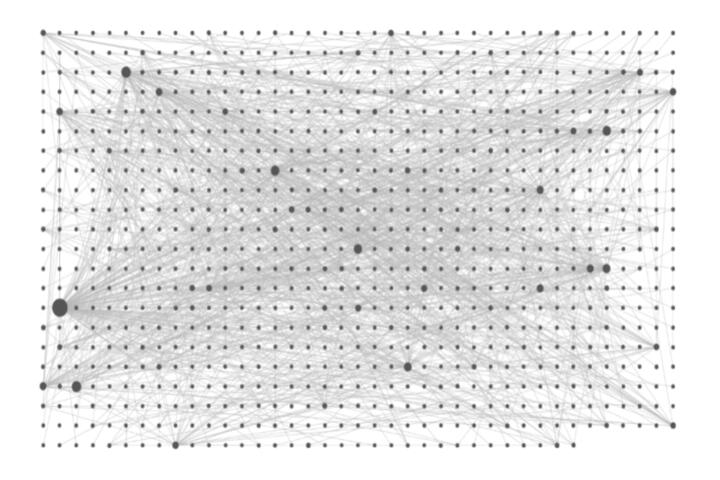
Modern note-taking has shifted from hierarchical folders to networked thought. Using "Wiki-links" (double brackets like [[Topic]]), you can create a web of interconnected ideas. In a Markdown environment, these links are just text strings. Even if your software changes, you can use a simple "Find and Replace" tool to update thousands of links across your entire library in seconds. This level of bulk-editing is impossible in binary formats like PDF or .pages.
Standardizing Collaborative Editing
Markdown is essential for "Docs like Code" workflows. By using Git (a version control system), teams can collaborate on the same document simultaneously. If two people change the same paragraph, Git highlights the conflict in plain text, making it easy to resolve. This is why 90% of open-source projects use a README.md file as their primary entry point. It ensures that anyone, on any machine, can read the instructions without needing to install specific software suites.
Real-World Stories
A mid-sized legal consulting firm recently transitioned their internal knowledge base from a proprietary wiki to a Git-based Markdown repository. Previously, they struggled with "document drift," where different versions of policy templates existed on various employees' desktops. By moving to plain text, they reduced the time spent searching for the "master version" by 40%. They now use a simple script to export these Markdown files into professionally formatted PDF contracts for clients, saving approximately $12,000 annually in software licensing fees.
In another case, a freelance investigative journalist moved ten years of research (over 4,000 notes) from Evernote to a Markdown-based system. By using an automated migration script, they recovered nearly 200 "lost" notes that had become corrupted in the proprietary database. The journalist reported that the ability to perform "Greps" (global searches for specific text patterns across all files) reduced their deep-research time by several hours per week.
Tool & Strategy Table
| Feature | Proprietary Apps (Notion/Evernote) | Markdown (Obsidian/Logseq) |
|---|---|---|
| Data Ownership | Stored on company servers | Local files on your hardware |
| Offline Access | Limited/Sync dependent | 100% Native |
| Longevity | Vulnerable to company EOL | Permanent (Standardized text) |
| Exporting | Often messy/Lossy | Universal compatibility |
| Cost | Subscription-based models | Mostly free/Open-source |
Common Mistakes to Avoid
The most frequent mistake beginners make is over-complicating their folder structure. Markdown thrives with a "flat" or "shallow" hierarchy combined with robust tagging and linking. Do not try to replicate a deep file cabinet; use the power of search. Another error is using non-standard Markdown extensions ("flavors") that only work in one specific app. Stick to the basics—bold, italics, headers, and lists—to ensure maximum portability.
Avoid embedding large binary files directly if your tool allows it; instead, keep a dedicated "Assets" folder. This keeps your text files small (usually under 10KB) and your system lightning fast. Lastly, don't ignore the "YAML frontmatter." Adding metadata like 'date:', 'tags:', and 'status:' at the very top of your note in a standardized block allows for advanced filtering and automation later on without cluttering the actual content of your note.
FAQ
Is Markdown difficult for non-technical users to learn?
Not at all. Most users can learn the basic syntax in under 10 minutes. Many modern editors also offer a "Live Preview" mode that hides the symbols as you type, making it feel just like a standard word processor while still saving the file as plain text.
Can I include images and videos in Markdown?
Yes. Markdown uses a simple link syntax for media: . While the image isn't "inside" the text file, the editor displays it seamlessly. This keeps your file sizes small and prevents document corruption.
What happens if I want to switch to a different app?
This is the best part of Markdown. You simply open your folder of files in the new app. There is no "import" process because the files are already in a universal format. Your headers, lists, and links will work immediately.
Can Markdown be used for professional publishing?
Absolutely. Many best-selling authors write their manuscripts in Markdown. Using a tool called Pandoc, you can convert a Markdown file into an ePub, LaTeX, or a professional-grade Word document with one command.
Does Markdown support tables and complex formatting?
Yes, though tables are the most "complex" part of the syntax. Most editors provide a shortcut or a table generator to make this easy. For extremely complex layouts, you can even drop raw HTML directly into your Markdown file.
Author’s Insight
I have spent over a decade testing various productivity systems, and I eventually lost a significant portion of my early career notes when a popular cloud service shut down. Switching to Markdown was not just a technical choice; it was an act of digital self-defense. My current library of 12,000+ notes is under 100MB, instantly searchable, and I know I will be able to read these exact files when I am 80 years old. My advice: start small, don't worry about "perfect" organization, and prioritize the longevity of your thoughts over the "flashy" features of the latest trending app.
Summary
Markdown is the ultimate insurance policy for your digital life. By choosing plain text over proprietary formats, you ensure that your notes remain accessible, portable, and useful for decades to come. The transition requires a small initial learning curve, but the payoff is a fast, distraction-free writing environment and total control over your data. Start by moving one project into a Markdown editor today and experience the freedom of a truly future-proof knowledge system.